<?xml version="1.0" encoding="UTF-8"?>
<?xml-stylesheet href="/rss.css" type="text/css"?>
<rdf:RDF xmlns="http://purl.org/rss/1.0/"
    xmlns:cc="http://web.resource.org/cc/"
    xmlns:dc="http://purl.org/dc/elements/1.1/"
    xmlns:extra="http://www.w3.org/1999/xhtml"
    xmlns:prism="http://prismstandard.org/namespaces/1.2/basic/"
    xmlns:rdf="http://www.w3.org/1999/02/22-rdf-syntax-ns#">
    <channel rdf:about="http://www.progressbiomaterials.com/feeds/latestarticles/journal?quantity=&amp;format=rss&amp;version=">
        <title>Progress in Biomaterials - Latest Articles</title>
        <link>http://www.progressbiomaterials.com</link>
        <description>The latest research articles published by Progress in Biomaterials</description>
        <dc:date>2013-04-23T00:00:00Z</dc:date>
        <items>
            <rdf:Seq>
                                <rdf:li rdf:resource="http://www.progressbiomaterials.com/content/2/1/11" />
                                <rdf:li rdf:resource="http://www.progressbiomaterials.com/content/2/1/10" />
                                <rdf:li rdf:resource="http://www.progressbiomaterials.com/content/2/1/9" />
                                <rdf:li rdf:resource="http://www.progressbiomaterials.com/content/2/1/8" />
                                <rdf:li rdf:resource="http://www.progressbiomaterials.com/content/2/1/7" />
                                <rdf:li rdf:resource="http://www.progressbiomaterials.com/content/2/1/6" />
                                <rdf:li rdf:resource="http://www.progressbiomaterials.com/content/2/1/5" />
                                <rdf:li rdf:resource="http://www.progressbiomaterials.com/content/2/1/4" />
                                <rdf:li rdf:resource="http://www.progressbiomaterials.com/content/2/1/3" />
                                <rdf:li rdf:resource="http://www.progressbiomaterials.com/content/2/1/2" />
                            </rdf:Seq>
        </items>
                 <cc:license rdf:resource="http://creativecommons.org/licenses/by/2.0/" />
    </channel>
        <item rdf:about="http://www.progressbiomaterials.com/content/2/1/11">
        <title>Engineering of chitosan and collagen macromolecules using sebacic acid for clinical applications</title>
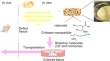
        <description>Transformation of natural polymers to three-dimensional (3D) scaffolds for biomedical applications faces a number of challenges, viz., solubility, stability (mechanical and thermal), strength, biocompatibility, and biodegradability. Hence, intensive research on suitable agents to provide the requisite properties has been initiated at the global level. In the present study, an attempt was made to engineer chitosan and collagen macromolecules using sebacic acid, and further evaluation of the mechanical stability and biocompatible property of the engineered scaffold material was done. A 3D scaffold material was prepared using chitosan at 1.0% (w/v) and sebacic acid at 0.2% (w/v); similarly, collagen at 0.5% (w/v) and sebacic acid at 0.2% (w/v) were prepared individually by freeze-drying technique. Analysis revealed that the engineered scaffolds displayed an appreciable mechanical strength and, in addition, were found to be biocompatible to NIH 3T3 fibroblast cells. Studies on the chemistry behind the interaction and the characteristics of the cross-linked scaffold materials suggested that non-covalent interactions play a major role in deciding the property of the said polymer materials. The prepared scaffold was suitable for tissue engineering application as a wound dressing material.</description>
        <link>http://www.progressbiomaterials.com/content/2/1/11</link>
                <dc:creator>G Sailakshmi</dc:creator>
                <dc:creator>Tapas Mitra</dc:creator>
                <dc:creator>A Gnanamani</dc:creator>
                <dc:source>Progress in Biomaterials 2013, null:11</dc:source>
        <dc:date>2013-04-23T00:00:00Z</dc:date>
        <dc:identifier>doi:10.1186/2194-0517-2-11</dc:identifier>
                                <prism:require>/content/figures/2194-0517-2-11-toc.gif</prism:require>
                <prism:publicationName>Progress in Biomaterials</prism:publicationName>
        <prism:issn>2194-0517</prism:issn>
        <prism:volume>${item.volume}</prism:volume>
        <prism:startingPage>11</prism:startingPage>
        <prism:publicationDate>2013-04-23T00:00:00Z</prism:publicationDate>
                <prism:versionidentifier>XML</prism:versionidentifier>
                <cc:license rdf:resource="http://creativecommons.org/licenses/by/2.0/" />
    </item>
        <item rdf:about="http://www.progressbiomaterials.com/content/2/1/10">
        <title>The effect of polymer and CaCl2 concentrations on the sulfasalazine release from alginate-N,O-carboxymethyl chitosan beads</title>
        <description>In this study, pH-sensitive blended polymeric beads were prepared by ionic gelation of mixed alginate and N,O-carboxymethyl chitosan (NOCC) solutions in aqueous media containing calcium chloride. To prepare drug-loaded beads, sulfasalazine (SA) as a model drug was added to the initial aqueous polymer solution. These beads were characterized and evaluated in vitro as potential carriers for colon-specific drug delivery. A 32 full factorial experimental design was employed to evaluate the effect of polymer and CaCl2 concentrations on swelling and drug release behavior of the beads in simulated gastrointestinal tract fluid. It was found that the rate of swelling and drug release decreased significantly with increasing polymer and CaCl2 concentrations, but polymer concentration was more effective than CaCl2 concentration. The beads prepared using 4.5% polymer concentration and 4% CaCl2 concentration retained approximately 60% of the loaded drug before approaching the simulated colonic fluid. Based on the results, the alginate-NOCC beads prepared with high polymer concentration could be potentially suitable polymeric carriers for colon-specific delivery of SA.</description>
        <link>http://www.progressbiomaterials.com/content/2/1/10</link>
                <dc:creator>Moslem Tavakol</dc:creator>
                <dc:creator>Ebrahim Vasheghani-Farahani</dc:creator>
                <dc:creator>Sameereh Hashemi-Najafabadi</dc:creator>
                <dc:source>Progress in Biomaterials 2013, null:10</dc:source>
        <dc:date>2013-04-04T00:00:00Z</dc:date>
        <dc:identifier>doi:10.1186/2194-0517-2-10</dc:identifier>
                                <prism:require>/content/figures/2194-0517-2-10-toc.gif</prism:require>
                <prism:publicationName>Progress in Biomaterials</prism:publicationName>
        <prism:issn>2194-0517</prism:issn>
        <prism:volume>${item.volume}</prism:volume>
        <prism:startingPage>10</prism:startingPage>
        <prism:publicationDate>2013-04-04T00:00:00Z</prism:publicationDate>
                <prism:versionidentifier>XML</prism:versionidentifier>
                <cc:license rdf:resource="http://creativecommons.org/licenses/by/2.0/" />
    </item>
        <item rdf:about="http://www.progressbiomaterials.com/content/2/1/9">
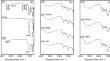
        <title>Infrared spectroscopic analysis of restorative composite materials&apos; surfaces and their saline extracts</title>
        <description>This study aims at finding out if multiple attenuated internal reflection-infrared (MAIR-IR) spectroscopic analysis can be used as a tool to differentiate commercial resin composite brands and to find out if different resin composites will have different abilities of leaching materials that are cytotoxic to human gingival fibroblasts (HGFs) Tooth-colored resin fillings have become increasingly popular as restorative materials, which make it important to differentiate the commercial brands for forensic and biological purposes. Fourteen resin composite brands were used in the study. MAIR-IR spectroscopic analysis was used for surface characterization of the organic and inorganic parts of the resin composite samples which were studied as is and after 2 weeks of saline incubation. IR spectroscopy was also done on the saline extracts to find out if different resin composite materials would have different leaching abilities. The saline extracts were also used for the viability testing of HGF cell cultures. One-way analysis of variance test statistics was used to analyze the results. It was found that the resin composite brands have different spectra after saline soaking. It was also found that these resin composite brands possess different leaching abilities with regard to the amount and type of materials and different cytotoxic effects, which were found to be threshold dependent, meaning there is a critical or threshold value of leaching material at or above which the toxic effect will be significant and below which there is no toxic effect. Therefore, IR spectroscopy might be considered as a useful tool for dental resin composite characterization. However, more oral simulating environmental testing methods, different surface characterization methods, and more cell viability testing methods and assays must be considered for more specific results which relate more to the behavior of these dental resin composites in the oral environment.</description>
        <link>http://www.progressbiomaterials.com/content/2/1/9</link>
                <dc:creator>Reem Ajaj</dc:creator>
                <dc:creator>Robert Baier</dc:creator>
                <dc:creator>Jude Fabiano</dc:creator>
                <dc:creator>Peter Bush</dc:creator>
                <dc:source>Progress in Biomaterials 2013, null:9</dc:source>
        <dc:date>2013-03-18T00:00:00Z</dc:date>
        <dc:identifier>doi:10.1186/2194-0517-2-9</dc:identifier>
                                <prism:require>/content/figures/2194-0517-2-9-toc.gif</prism:require>
                <prism:publicationName>Progress in Biomaterials</prism:publicationName>
        <prism:issn>2194-0517</prism:issn>
        <prism:volume>${item.volume}</prism:volume>
        <prism:startingPage>9</prism:startingPage>
        <prism:publicationDate>2013-03-18T00:00:00Z</prism:publicationDate>
                <prism:versionidentifier>XML</prism:versionidentifier>
                <cc:license rdf:resource="http://creativecommons.org/licenses/by/2.0/" />
    </item>
        <item rdf:about="http://www.progressbiomaterials.com/content/2/1/8">
        <title>Current progress on bio-based polymers and their future trends</title>
        <description>This article reviews the recent trends, developments, and future applications of bio-based polymers produced from renewable resources. Bio-based polymers are attracting increased attention due to environmental concerns and the realization that global petroleum resources are finite. Bio-based polymers not only replace existing polymers in a number of applications but also provide new combinations of properties for new applications. A range of bio-based polymers are presented in this review, focusing on general methods of production, properties, and commercial applications. The review examines the technological and future challenges discussed in bringing these materials to a wide range of applications, together with potential solutions, as well as discusses the major industry players who are bringing these materials to the market.</description>
        <link>http://www.progressbiomaterials.com/content/2/1/8</link>
                <dc:creator>Ramesh Babu</dc:creator>
                <dc:creator>Kevin O'Connor</dc:creator>
                <dc:creator>Ramakrishna Seeram</dc:creator>
                <dc:source>Progress in Biomaterials 2013, null:8</dc:source>
        <dc:date>2013-03-18T00:00:00Z</dc:date>
        <dc:identifier>doi:10.1186/2194-0517-2-8</dc:identifier>
                                <prism:require>/content/figures/2194-0517-2-8-toc.gif</prism:require>
                <prism:publicationName>Progress in Biomaterials</prism:publicationName>
        <prism:issn>2194-0517</prism:issn>
        <prism:volume>${item.volume}</prism:volume>
        <prism:startingPage>8</prism:startingPage>
        <prism:publicationDate>2013-03-18T00:00:00Z</prism:publicationDate>
                <prism:versionidentifier>XML</prism:versionidentifier>
                <cc:license rdf:resource="http://creativecommons.org/licenses/by/2.0/" />
    </item>
        <item rdf:about="http://www.progressbiomaterials.com/content/2/1/7">
        <title>Optimization of monomethoxy poly(ethylene glycol) grafting on Langerhans islets capsule using response surface method</title>
        <description>Langerhans islet transplantation is a much less invasive approach compared with the pancreas transplantation to &#8216;cure&#8217; diabetes. However, destruction of transplanted islets by the immune system is an impediment for a successful treatment. Chemical grafting of monomethoxy poly(ethylene glycol) onto pancreatic islet capsule is a novel approach in islet immunoisolation. The aim of this study was to determine an optimized condition for grafting of monomethoxy poly(ethylene glycol) succinimidyl propionate (mPEG-SPA) on islets capsule. Independent variables such as reaction time, the percentage of longer mPEG in the mixture, and polymer concentration were optimized using a three-factor, three-level Box-Behnken statistical design. The dependent variable was IL-2 (interleukin-2) secretion of lymphocytes co-cultured with PEGylated or uncoated control islets for 7 days co-culturing. A mathematical relationship is obtained which explained the main and quadratic effects and the interaction of factors which affected IL-2 secretion. Response surface methodology predicted the optimized values of reaction time, the percentage of longer mPEG in the mixture, and polymer concentration of 60 min to be 63.7% mPEG10 and 22 mg/mL, respectively, for the minimization of the secreted IL-2 as response. Islets which were PEGylated at this condition were transplanted to diabetic rats. The modified islets could survive for 24 days without the aid of any immunosuppressive drugs and it is the longest survival date reported so far. However, free islets (unmodified islets as control) are completely destroyed within 7 days. These results strongly suggest that this new protocol provides an effective clinical means of decreasing transplanted islet immunogenicity.</description>
        <link>http://www.progressbiomaterials.com/content/2/1/7</link>
                <dc:creator>Hamideh Aghajani-Lazarjani</dc:creator>
                <dc:creator>Ebrahim Vasheghani-Farahani</dc:creator>
                <dc:creator>Sameereh Hashemi-Najafabadi</dc:creator>
                <dc:creator>Seyed Shojaosadati</dc:creator>
                <dc:creator>Saleh Zahediasl</dc:creator>
                <dc:creator>Taki Tiraihi</dc:creator>
                <dc:creator>Fatemeh Atyabi</dc:creator>
                <dc:source>Progress in Biomaterials 2013, null:7</dc:source>
        <dc:date>2013-03-09T00:00:00Z</dc:date>
        <dc:identifier>doi:10.1186/2194-0517-2-7</dc:identifier>
                                <prism:require>/content/figures/2194-0517-2-7-toc.gif</prism:require>
                <prism:publicationName>Progress in Biomaterials</prism:publicationName>
        <prism:issn>2194-0517</prism:issn>
        <prism:volume>${item.volume}</prism:volume>
        <prism:startingPage>7</prism:startingPage>
        <prism:publicationDate>2013-03-09T00:00:00Z</prism:publicationDate>
                <prism:versionidentifier>XML</prism:versionidentifier>
                <cc:license rdf:resource="http://creativecommons.org/licenses/by/2.0/" />
    </item>
        <item rdf:about="http://www.progressbiomaterials.com/content/2/1/6">
        <title>Electrospun eri silk fibroin scaffold coated with hydroxyapatite for bone tissue engineering applications</title>
        <description>Natural biomaterials such as collagen, silk fibroin, and chitosan, and synthetic biopolymers such as polylactic acid, polycaprolactone, polyglycolic acid, and their copolymers are being used as scaffold for tissue engineering applications. In the present work, a fibrous mat was electrospun from eri silk fibroin (ESF). A composite of hydroxyapatite (Hap) and the ESF scaffold was prepared by soaking the ESF scaffold in a solution of calcium chloride and then in sodium diammonium phosphate. The average tensile stress of the pure ESF and hydroxyapatite-coated ESF scaffold (ESF-Hap) was found to be 1.84 and 0.378 MPa, respectively. Pure ESF and ESF-Hap scaffolds were evaluated for their characteristics by a themogravimetric analyzer and Fourier transform infrared spectroscope. The crystallinity and thermal stability of the ESF-Hap scaffold were found to be more than that of uncoated eri silk nanofiber scaffold. The water uptake of the pure ESF and ESF-Hap scaffolds was found to be 69% and 340%, respectively, in distilled water as well as phosphate buffer saline. The hemolysis percentage of both scaffolds was less than 5%, which indicate their good blood compatibility. The cytocompatibility studied by 3-(4,5-dimethyl) thiazol-2-yl-2,5-dimethyl tetrazolium bromide assay showed that the scaffold is biocompatible. To assess cell attachment and growth on the scaffold, human mesenchymal stem cells were cultured on the scaffolds. The results from scanning electron microscopy and fluorescent microscopy showed a notable cellular growth and favorable morphological features. Hence, the ESF-Hap scaffold is better suited for cell growth than the pure ESF scaffold.</description>
        <link>http://www.progressbiomaterials.com/content/2/1/6</link>
                <dc:creator>Muthumanickkam Andiappan</dc:creator>
                <dc:creator>Subramanian Sundaramoorthy</dc:creator>
                <dc:creator>Niladrinath Panda</dc:creator>
                <dc:creator>Gowri Meiyazhaban</dc:creator>
                <dc:creator>Sofi Winfred</dc:creator>
                <dc:creator>Ganesh Venkataraman</dc:creator>
                <dc:creator>Pramanik Krishna</dc:creator>
                <dc:source>Progress in Biomaterials 2013, null:6</dc:source>
        <dc:date>2013-03-08T00:00:00Z</dc:date>
        <dc:identifier>doi:10.1186/2194-0517-2-6</dc:identifier>
                                <prism:require>/content/figures/2194-0517-2-6-toc.gif</prism:require>
                <prism:publicationName>Progress in Biomaterials</prism:publicationName>
        <prism:issn>2194-0517</prism:issn>
        <prism:volume>${item.volume}</prism:volume>
        <prism:startingPage>6</prism:startingPage>
        <prism:publicationDate>2013-03-08T00:00:00Z</prism:publicationDate>
                <prism:versionidentifier>PDF</prism:versionidentifier>
                <cc:license rdf:resource="http://creativecommons.org/licenses/by/2.0/" />
    </item>
        <item rdf:about="http://www.progressbiomaterials.com/content/2/1/5">
        <title>Enzyme-modified indium tin oxide microelectrode array-based electrochemical uric acid biosensor</title>
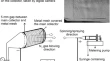
        <description>We fabricated a miniaturized electrochemical uric acid biosensor with a 3-aminopropyltriethoxysilane (APTES)-modified indium tin oxide (ITO) microelectrode array (&#956;EA). The ITO-&#956;EA on a glass plate was immobilized with the enzyme uricase, through a cross-linker, bis[sulfosuccinimidyl]suberate (BS3). The enzyme-immobilized electrode (uricase/BS3/APTES/ITO-&#956;EA/glass) was characterized by atomic force microscopy and electrochemical techniques. The cyclic voltammetry and impedance studies show an effective binding of uricase at the &#956;EA surface. The amperometric response of the modified electrode was measured towards uric acid concentration in aqueous solution (pH 7.4), under microfluidic channel made of polydimethylsiloxane. The &#956;EA biosensor shows a linear response over a concentration range of 0.058 to 0.71 mM with a sensitivity of 46.26 &#956;A mM&#8722;1 cm&#8722;2. A response time of 40 s reaching a 95% steady-state current value was obtained. The biosensor retains about 85% of enzyme activity for about 6 weeks. The biosensor using &#956;EA instead of a large single band of electrode allows the entire core of the channel to be probed though keeping an improved sensitivity with a small volume of sample and reagents.</description>
        <link>http://www.progressbiomaterials.com/content/2/1/5</link>
                <dc:creator>Nidhi Puri</dc:creator>
                <dc:creator>Vikash Sharma</dc:creator>
                <dc:creator>Vinod Tanwar</dc:creator>
                <dc:creator>Nahar Singh</dc:creator>
                <dc:creator>Ashok Biradar</dc:creator>
                <dc:creator>Rajesh </dc:creator>
                <dc:source>Progress in Biomaterials 2013, null:5</dc:source>
        <dc:date>2013-02-22T00:00:00Z</dc:date>
        <dc:identifier>doi:10.1186/2194-0517-2-5</dc:identifier>
                                <prism:require>/content/figures/2194-0517-2-5-toc.gif</prism:require>
                <prism:publicationName>Progress in Biomaterials</prism:publicationName>
        <prism:issn>2194-0517</prism:issn>
        <prism:volume>${item.volume}</prism:volume>
        <prism:startingPage>5</prism:startingPage>
        <prism:publicationDate>2013-02-22T00:00:00Z</prism:publicationDate>
                <prism:versionidentifier>XML</prism:versionidentifier>
                <cc:license rdf:resource="http://creativecommons.org/licenses/by/2.0/" />
    </item>
        <item rdf:about="http://www.progressbiomaterials.com/content/2/1/4">
        <title>Structure and biocompatibility of poly(vinyl alcohol)-based and agarose-based monolithic composites with embedded divinylbenzene-styrene polymeric particles</title>
        <description>Macroporous monolithic composites with embedded divinylbenzene-styrene (DVB-ST) polymeric particles were prepared by cryogelation techniques using poly(vinyl alcohol) or agarose solutions. Scanning electron microscopy images showed multiple interconnected pores with an average diameter in the range of 4 to 180 &#956;m and quite homogeneous distribution of DVB-ST particles in the composites. Biocompatibility of the composites was assessed by estimation of the C5a fragment of complement in the blood serum and concentration of fibrinogen in the blood plasma which contacted the composites. A time-dependent generation of C5a fragment indicated weak activation of the complement system. At the same time, the difference in fibrinogen concentration, one of the most important proteins in the coagulation system of the blood, between the pristine blood plasma and the plasma, circulated through the monolithic columns, was insignificant.</description>
        <link>http://www.progressbiomaterials.com/content/2/1/4</link>
                <dc:creator>Lydia Berezhna</dc:creator>
                <dc:creator>Alexander Ivanov</dc:creator>
                <dc:creator>André Leistner</dc:creator>
                <dc:creator>Anke Lehmann</dc:creator>
                <dc:creator>Maria Viloria-Cols</dc:creator>
                <dc:creator>Hans Jungvid</dc:creator>
                <dc:source>Progress in Biomaterials 2013, null:4</dc:source>
        <dc:date>2013-02-21T00:00:00Z</dc:date>
        <dc:identifier>doi:10.1186/2194-0517-2-4</dc:identifier>
                                <prism:require>/content/figures/2194-0517-2-4-toc.gif</prism:require>
                <prism:publicationName>Progress in Biomaterials</prism:publicationName>
        <prism:issn>2194-0517</prism:issn>
        <prism:volume>${item.volume}</prism:volume>
        <prism:startingPage>4</prism:startingPage>
        <prism:publicationDate>2013-02-21T00:00:00Z</prism:publicationDate>
                <prism:versionidentifier>XML</prism:versionidentifier>
                <cc:license rdf:resource="http://creativecommons.org/licenses/by/2.0/" />
    </item>
        <item rdf:about="http://www.progressbiomaterials.com/content/2/1/3">
        <title>An integrated experimental and modeling approach to propose biotinylated PLGA microparticles as versatile targeting vehicles for drug delivery</title>
        <description>Polymeric microparticles with covalently attached biotin are proposed as versatile targeting vehicles for drug delivery. The proposed microparticles made of 85/15 poly (lactic-co-glycolic acid) (PLGA) will have biotin available on the outside of the particle for the further attachment with an avidin group. Taking advantage of biotin&#8217;s high affinity for avidin, and avidin&#8217;s well-known chemistry, the particle has the potential to be easily coated with a variety of targeting moieties. This paper focuses on the design and resulting effect of adding biotin to PLGA microparticles using an integrated experimental and modeling approach. A fluorescent-tagged avidin (488-streptavidin) was used to confirm the presence and bioavailability of biotin on the outside of the particles. For the purpose of this study, bovine serum albumin (BSA) was used as a model therapeutic drug. Microparticles were created using two different types of polyvinyl alcohol 88 and 98 mol% hydrolyzed, which were then analyzed for their size, morphology, and encapsulation capacity of BSA. Release studies performed in vitro confirmed the slow release of the BSA over a 28-day period. Based on these release profiles, a release kinetics model was used to further quantify the effect of biotinylation of PLGA microparticles on their release characteristics by quantitatively extracting the effective drug diffusivity and drug desorption rate from the release profiles. It was found that the biotinylation of the PLGA microparticles slowed down both the drug desorption and drug diffusion process, which confirmed that biotinylated PLGA microparticles can be used for controlled drug release. The presented technology, as well as the proposed integrated experimental and modeling approach, forms a solid foundation for future studies using a cell-specific ligand that can be attached to avidin and incorporated onto the microparticles for targeted delivery.</description>
        <link>http://www.progressbiomaterials.com/content/2/1/3</link>
                <dc:creator>Olivia Donaldson</dc:creator>
                <dc:creator>Zuyi Huang</dc:creator>
                <dc:creator>Noelle Comolli</dc:creator>
                <dc:source>Progress in Biomaterials 2013, null:3</dc:source>
        <dc:date>2013-02-13T00:00:00Z</dc:date>
        <dc:identifier>doi:10.1186/2194-0517-2-3</dc:identifier>
                                <prism:require>/content/figures/2194-0517-2-3-toc.gif</prism:require>
                <prism:publicationName>Progress in Biomaterials</prism:publicationName>
        <prism:issn>2194-0517</prism:issn>
        <prism:volume>${item.volume}</prism:volume>
        <prism:startingPage>3</prism:startingPage>
        <prism:publicationDate>2013-02-13T00:00:00Z</prism:publicationDate>
                <prism:versionidentifier>XML</prism:versionidentifier>
                <cc:license rdf:resource="http://creativecommons.org/licenses/by/2.0/" />
    </item>
        <item rdf:about="http://www.progressbiomaterials.com/content/2/1/2">
        <title>Evaluation of polyphenylene ether ether sulfone/nanohydroxyapatite nanofiber composite as a biomaterial for hard tissue replacement</title>
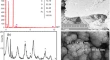
        <description>The present work is aimed at investigating the mechanical and in vitro biological properties of polyphenylene ether ether sulfone (PPEES)/nanohydroxyapatite (nHA) composite fibers. Electrospinning was used to prepare nanofiber composite mats of PPEES/nHA with different weight percentages of the inorganic filler, nHA. The fabricated composites were characterized using Fourier transform infrared spectroscopy (FTIR)-attenuated total reflectance spectroscopy (ATR) and scanning electron microscopy (SEM)-energy dispersive X-ray spectroscopy (EDX) techniques. The mechanical properties of the composite were studied with a tensile tester. The FTIR-ATR spectrum depicted the functional group as well as the interaction between the PPEES and nHA composite materials; in addition, the elemental groups were identified with EDX analysis. The morphology of the nanofiber composite was studied by SEM. Tensile strength analysis of the PPEES/nHA composite revealed the elastic nature of the nanofiber composite reinforced with nHA and suggested significant mechanical strength of the composite. The biomineralization studies performed using simulated body fluid with increased incubation time showed enhanced mineralization, which showed that the composites possessed high bioactivity property. Cell viability of the nanofiber composite, studied with osteoblast (MG-63) cells, was observed to be higher in the composites containing higher concentrations of nHA.</description>
        <link>http://www.progressbiomaterials.com/content/2/1/2</link>
                <dc:creator>Manickam Ashokkumar</dc:creator>
                <dc:creator>Dharmalingam Sangeetha</dc:creator>
                <dc:source>Progress in Biomaterials 2013, null:2</dc:source>
        <dc:date>2013-02-06T00:00:00Z</dc:date>
        <dc:identifier>doi:10.1186/2194-0517-2-2</dc:identifier>
                                <prism:require>/content/figures/2194-0517-2-2-toc.gif</prism:require>
                <prism:publicationName>Progress in Biomaterials</prism:publicationName>
        <prism:issn>2194-0517</prism:issn>
        <prism:volume>${item.volume}</prism:volume>
        <prism:startingPage>2</prism:startingPage>
        <prism:publicationDate>2013-02-06T00:00:00Z</prism:publicationDate>
                <prism:versionidentifier>XML</prism:versionidentifier>
                <cc:license rdf:resource="http://creativecommons.org/licenses/by/2.0/" />
    </item>
        <cc:License rdf:about="http://creativecommons.org/licenses/by/2.0/">
        <cc:permits rdf:resource="http://creativecommons.org/ns#Reproduction" />
        <cc:permits rdf:resource="http://creativecommons.org/ns#Distribution" />
        <cc:permits rdf:resource="http://creativecommons.org/ns#DerivativeWorks" />
    </cc:License>
</rdf:RDF>